By Dr. Boris Nektalov, DNM, DC, Chiropractor & Enzyme Nutrition Specialist · Nektalov Chiropractic & Wellness, Forest Hills, Queens NY
Published: July 6, 2026 · Last reviewed: July 6, 2026
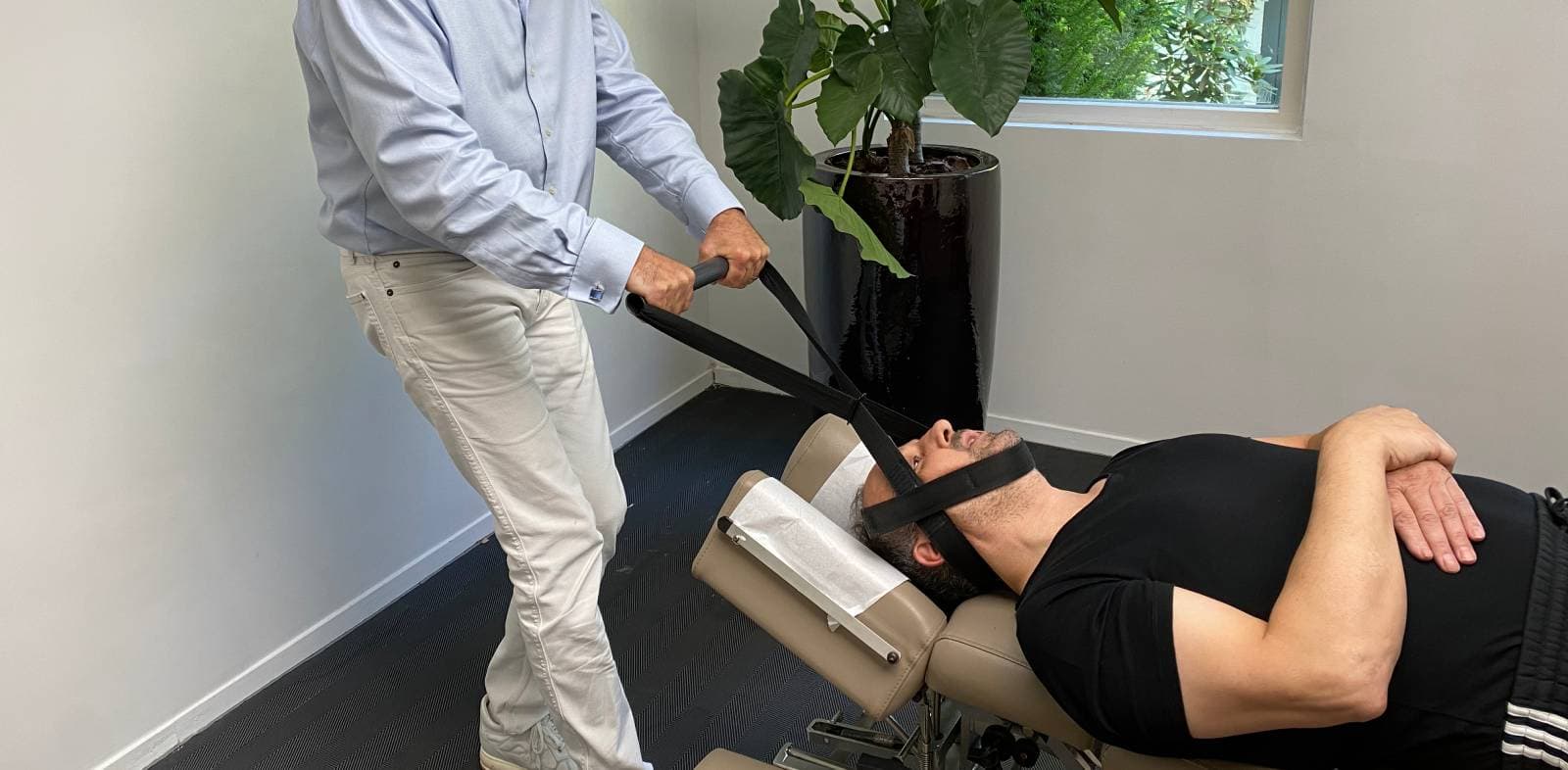
The short answer: A Y-Strap adjustment — popularly called the "Ring Dinger" — is a chiropractic decompression technique in which a specially designed strap cradles the patient's head while the chiropractor applies a controlled traction force along the axis of the spine. Unlike a traditional adjustment that targets one joint, the Y-Strap decompresses multiple spinal regions at once, from the cervical spine through the lower back.
You've probably seen it. Y-Strap videos have accumulated hundreds of millions of views across YouTube, TikTok, and Instagram — the dramatic full-spine release makes for compelling footage. But the viral moment isn't the point of the technique. The decompression is.
At Nektalov Chiropractic & Wellness in Forest Hills, Queens, we offer Y-Strap decompression as one tool within a comprehensive, individualized treatment plan — never as a standalone spectacle. This article covers what the technique actually does, how it differs from traditional adjustments, who is (and isn't) a candidate, and what to expect.
What Happens During a Y-Strap Adjustment?
The procedure is straightforward and takes only seconds once the patient is properly positioned:
- Positioning — The patient lies supine (face up) on the adjustment table, fully relaxed.
- Strap placement — The Y-shaped strap is positioned securely around the base of the skull and under the chin.
- Pre-tension — The chiropractor applies gradual axial traction to remove slack and confirm patient comfort.
- Decompression impulse — A controlled, high-velocity, low-amplitude pull is delivered along the long axis of the spine.
- Release and reassessment — The patient rests briefly while the chiropractor evaluates the response.
The audible release many patients experience is cavitation — gas releasing from spinal joint spaces — the same phenomenon behind the "pop" in a traditional adjustment. The sound is not the therapeutic mechanism; the decompression is.
Why Spinal Decompression Matters: The Compression Problem
The spine spends most of the day under load. Research using intradiscal pressure measurement found that lumbar disc pressure while sitting is significantly higher than while standing or lying down (Wilke et al., Spine, 1999). Add modern habits and the load compounds:
- Tilting the head forward to look at a phone increases the effective load on the cervical spine from roughly 10–12 pounds at neutral to as much as 60 pounds at 60 degrees of flexion (Hansraj, Surgical Technology International, 2014)
- Low back pain affects an estimated 619 million people globally, making it the leading cause of disability worldwide (WHO / The Lancet Rheumatology, 2023)
- Prolonged sitting, repetitive movement, poor posture, and prior injury all contribute to cumulative compressive stress on discs and joints
Over time, this compression contributes to stiffness, reduced mobility, headaches, neck pain, and lower back discomfort — the exact complaints that bring most patients into our Forest Hills office.
Y-Strap decompression creates a traction effect that temporarily reduces compressive load on spinal discs and surrounding structures. Research on axial decompression therapy has associated it with improvements in disc height and reductions in chronic low back pain in appropriately selected patients (Apfel et al., BMC Musculoskeletal Disorders, 2010). Patients commonly report feeling lighter, looser, and more mobile after treatment.
Y-Strap vs. Traditional Chiropractic Adjustment: What's the Difference?
| Traditional Adjustment | Y-Strap Decompression | |
|---|---|---|
| Target | Specific restricted or misaligned joint segment | Multiple spinal regions simultaneously |
| Force direction | Rotational or lateral, segment-specific | Axial (along the length of the spine) |
| Primary effect | Restores motion to a specific joint | Global decompression and traction |
| Best suited for | Segmental restrictions, targeted dysfunction | Generalized compression, postural stress, full-spine tension |
| Replaces the other? | No | No — they are complementary tools |
Neither technique is universally "better." Some patients respond best to diversified adjustments, others to decompression, soft tissue therapy, rehab exercises, or postural correction — and most benefit from a combination. The right plan comes from examination findings, not from what's trending online.
Who Is a Candidate for the Y-Strap — and Who Isn't?
Good candidates typically present with:
- Chronic neck or back stiffness and generalized spinal tension
- Postural stress from prolonged sitting, desk work, or device use
- Reduced spinal mobility without underlying instability
- Compression-related discomfort seeking conservative, non-surgical care
The Y-Strap is NOT appropriate for patients with:
- Spinal instability or ligamentous laxity
- Fractures or suspected fractures
- Severe osteoporosis
- Certain disc pathologies, vascular conditions, or other medical contraindications identified during examination
This screening is why every patient at our practice undergoes a thorough consultation, spinal examination, and — when clinically indicated — digital imaging before any Y-Strap treatment is recommended. No technique is performed simply because it's popular. Patient safety comes first, every time.
Important: The Y-Strap adjustment is not a cure for disc herniations, sciatica, or structural disc injury. Many patients with these conditions report reduced tension and improved mobility with decompression-based care, but expectations should be set by examination findings — not by social media.
Why the Ring Dinger Went Viral — and What That Means for Patients
Three forces drove the technique's popularity:
- Visible results — Viewers watch patients move noticeably better seconds after treatment
- The audible release — Cavitation is dramatic on camera, even though it isn't the therapeutic mechanism
- The shift toward conservative care — More patients want to exhaust natural, non-surgical, non-pharmaceutical options before considering injections or surgery
That third point is the meaningful one. The Y-Strap's popularity reflects a real demand for conservative spinal care — and that demand aligns with the core philosophy of chiropractic: identify the root cause, support the body's capacity to heal, and reserve invasive intervention for when it's truly necessary.
Beyond the Adjustment: Structure + Internal Health
At Nektalov Chiropractic & Wellness, spinal care is half the picture. Chronic inflammation, poor digestion, and lifestyle stress directly affect how well tissue recovers between visits — which is why we pair structural care with enzyme nutrition therapy and inflammation management.
A patient receiving excellent decompression care while running high systemic inflammation is healing uphill. By addressing both the structural environment (adjustment, decompression, posture) and the internal environment (digestion, nutrient absorption, inflammatory load), we create the conditions where results actually hold between visits.
How gut health affects hormones and performance
What to Expect at Your First Visit
- Consultation — Full history: your symptoms, lifestyle, injuries, and goals
- Examination — Spinal and postural assessment; digital imaging if clinically indicated
- Report of findings — What we found, what it means, and which techniques are appropriate for you
- Individualized plan — Y-Strap decompression is included only when your examination supports it
If you've been dealing with neck pain, back pain, spinal stiffness, or postural stress and want to know whether Y-Strap decompression is right for your condition, schedule a consultation at our Forest Hills, Queens office. We'll evaluate your spine, answer your questions honestly, and map the best path toward recovery.
Book a consultation or book online. Explore our chiropractic services in Forest Hills.
When to Seek Additional Medical Care
If you are experiencing progressive neurological symptoms — numbness or weakness in the limbs, loss of bowel or bladder control, unexplained weight loss with back pain, or pain following significant trauma — seek medical evaluation promptly. Chiropractic care complements, but does not replace, appropriate medical assessment.
Frequently asked questions
What is a Y-Strap adjustment (Ring Dinger)?
A Y-Strap adjustment is a chiropractic decompression technique in which a Y-shaped strap is placed around the patient's head while the chiropractor applies controlled axial traction along the spine. Unlike traditional adjustments targeting single joints, it decompresses multiple spinal regions — cervical through lumbar — simultaneously.
Is the Y-Strap adjustment safe?
When performed by a licensed chiropractor after proper screening, the Y-Strap is a controlled, low-amplitude decompression technique. It is not appropriate for everyone — spinal instability, fractures, severe osteoporosis, and certain disc conditions are contraindications, which is why examination and imaging (when indicated) always come before treatment.
What is the difference between a Y-Strap adjustment and a regular chiropractic adjustment?
A traditional chiropractic adjustment restores motion to a specific restricted joint using targeted, segment-specific force. A Y-Strap adjustment applies axial traction along the entire spine, decompressing multiple regions at once. The techniques are complementary — most treatment plans use them together based on examination findings.
Does the Y-Strap adjustment help with sciatica or herniated discs?
The Y-Strap is not a cure for disc herniations or sciatica. However, many patients with compression-related symptoms report reduced spinal tension and improved mobility following decompression care. Candidacy depends on examination findings, and some disc conditions are contraindications — which is why screening comes first.
Why does the Y-Strap adjustment make a popping sound?
The audible release is cavitation — gas releasing from the fluid within spinal joint spaces as pressure changes, the same phenomenon behind the "pop" in traditional adjustments. The sound is not the therapeutic mechanism. The benefit comes from the decompression and restored mobility, not the noise.
Where can I get a Y-Strap adjustment in Queens, NY?
Nektalov Chiropractic & Wellness in Forest Hills, Queens offers Y-Strap decompression as part of comprehensive, individualized chiropractic care. Dr. Boris Nektalov performs a full consultation, spinal examination, and imaging when indicated before recommending the technique. Visit nektalovhealth.com to schedule a consultation.
This article is intended for informational purposes. It does not constitute medical advice. Patients with emergent symptoms including loss of bladder or bowel control, severe or rapidly progressing neurological deficits, or suspected spinal fracture should seek emergency medical evaluation immediately.