By Dr. Boris Nektalov, DNM, DC, Chiropractor & Enzyme Nutrition Specialist · Nektalov Chiropractic & Wellness, Forest Hills, Queens NY
Published: July 24, 2026 · Last reviewed: July 24, 2026
The short answer: In most cases, yes. Research consistently shows that the majority of herniated discs and sciatica cases improve with conservative care alone — no surgery, injections, or long-term medication required. At Nektalov Chiropractic & Wellness in Forest Hills, we combine chiropractic adjustments, spinal decompression, soft tissue therapy, shockwave therapy, and red light therapy to address both the mechanical and inflammatory sides of nerve pain.
Low back pain is the leading cause of disability worldwide, affecting an estimated 619 million people globally as of 2020 — a number projected to rise to 843 million by 2050 (Global Burden of Disease Study, Lancet Rheumatology, 2023). For many of the patients we see in Forest Hills and across Queens, the pain doesn't stay in the low back — it travels into the buttock, thigh, calf, or foot. That radiating pattern is often a sign of a pinched nerve caused by a herniated or bulging disc.
What Is a Herniated Disc?
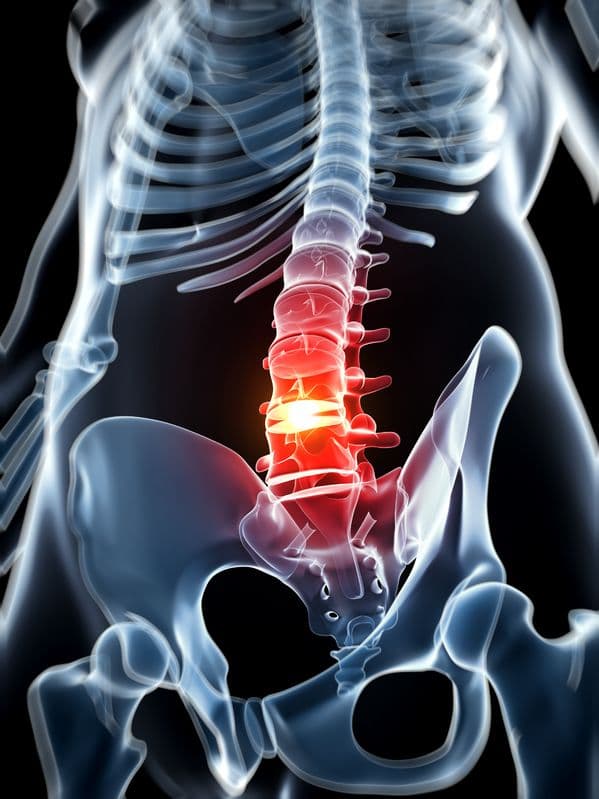
A herniated disc occurs when the soft, gel-like center of a spinal disc pushes through a tear in its tougher outer layer and presses on a nearby nerve root. This irritation triggers an inflammatory response around the nerve, which is what produces the burning, radiating pain most people associate with a “pinched nerve” in the low back.
What Does Sciatica Feel Like?
Sciatica is the term for nerve pain that radiates along the path of the sciatic nerve — from the low back, through the buttock, and down the back of one or both legs. Common symptoms include:
- Sharp, burning, or electric-shock-like pain down one leg
- Numbness or tingling in the thigh, calf, or foot
- Muscle weakness in the leg or foot
- Pain that worsens with sitting, coughing, or sneezing
- Difficulty standing up straight or walking normally
Many patients assume the pain originates in the leg itself, since that's where it's felt most intensely. In reality, the problem almost always begins in the lower spine — which is why an accurate diagnosis matters more than treating the leg symptom in isolation.
How We Diagnose the Root Cause
Every patient at our Forest Hills office begins with a detailed consultation and physical examination. When appropriate, we obtain digital X-rays or review existing MRI studies to confirm exactly which disc and nerve level is involved. We don't just treat symptoms — we work to understand why they developed in the first place, since a bulging disc at L4-L5 and one at L5-S1 can require meaningfully different treatment strategies.
Restoring Joint Motion: The Role of Chiropractic Adjustment
When spinal joints become restricted — from injury, poor posture, repetitive movement, or prolonged sitting — the surrounding muscles tighten, and additional pressure is often placed on the discs and nerves nearby. A 2006 randomized controlled trial published in The Spine Journal found that patients with acute low back pain and confirmed disc protrusion who received spinal manipulation experienced significantly greater short-term pain relief than those who received a placebo (Santilli et al., 2006). Restoring normal joint motion through chiropractic adjustment is one of the primary mechanisms by which we work to reduce that pressure and relieve nerve irritation.
Beyond the Adjustment: Soft Tissue Therapy
Chiropractic care involves far more than spinal adjustments alone. Tight muscles, fascia, and connective tissue in the lower back, hips, glutes, and hamstrings frequently place additional mechanical stress on the spine and can prolong recovery if left untreated. By combining adjustments with soft tissue therapy, we help restore normal movement patterns and reduce that stress throughout the kinetic chain — not just at the point of pain.
Shockwave Therapy for Chronic Low Back Pain
Shockwave therapy (extracorporeal shockwave therapy, or ESWT) uses high-energy acoustic waves to stimulate circulation, promote tissue healing, and help break down chronic scar tissue and trigger points within muscles and connective tissue. It's best known for treating plantar fasciitis and tennis elbow, but it's also an effective adjunct for the chronic muscular dysfunction that frequently accompanies long-standing low back pain.
Red Light Therapy (Photobiomodulation) for Nerve Pain and Inflammation
Red light therapy, also called low-level laser therapy or photobiomodulation, uses specific wavelengths of light to penetrate tissue and support cellular repair, circulation, and inflammation control. Evidence specific to disc-related back pain is still developing, but red light therapy is a well-tolerated, non-invasive addition to a broader rehabilitation plan — particularly for patients looking to minimize reliance on anti-inflammatory medication.
Treatment Modalities at a Glance
| Modality | What It Targets | How It Helps |
|---|---|---|
| Chiropractic adjustment | Restricted spinal joints | Restores motion, reduces pressure on discs and nerves |
| Soft tissue therapy | Muscles, fascia, ligaments | Reduces mechanical stress feeding into the spine |
| Spinal decompression | Disc space and intradiscal pressure | May reduce pressure on the disc and irritated nerve root |
| Shockwave therapy (ESWT) | Chronic muscular dysfunction, trigger points | Stimulates circulation, breaks down scar tissue |
| Red light therapy | Cellular inflammation | Supports tissue repair, may reduce inflammation |
| Enzyme nutrition | Systemic inflammation | Supports digestion and an anti-inflammatory internal environment |
The Modern Lifestyle Factor: Sitting, Posture, and Disc Health
Classic biomechanical research by orthopedic surgeon Alf Nachemson found that seated posture increases pressure within the lumbar discs by roughly 40% compared to standing — one reason prolonged desk work, driving, and screen time are so strongly linked to disc-related back pain. Over years, poor posture, weak core muscles, tight hip flexors, and reduced spinal mobility create the exact conditions that lead to disc injury and nerve irritation. Many patients who come to us for sciatica treatment in Forest Hills have unknowingly spent years developing the movement patterns that contributed to their condition — which is why we build posture, ergonomic, and movement retraining into every treatment plan, not just the hands-on care.
Healing from Within: Inflammation and Enzyme Nutrition
Research published in Spine has identified elevated inflammatory markers — including TNF-alpha and interleukin-6 — directly in herniated disc tissue, suggesting that systemic inflammation can worsen nerve irritation independent of mechanical compression alone (Kang et al., Spine, 1996). This is why we integrate enzyme nutrition and anti-inflammatory wellness recommendations into treatment plans. Learn more in our guide on gut health and inflammation.
When Herniated Disc Symptoms Need Immediate Medical Attention
Not every case is appropriate for conservative care. The symptoms below require immediate medical evaluation:
| Red Flag Symptom | Why It's Urgent |
|---|---|
| Loss of bowel or bladder control | Possible cauda equina syndrome — a surgical emergency |
| Numbness in the groin or inner thighs ("saddle" numbness) | Also associated with cauda equina syndrome |
| Progressive or severe leg weakness | May indicate significant nerve compression requiring urgent evaluation |
| Symptoms in both legs simultaneously | Suggests more significant central spinal involvement |
| Unexplained fever with back pain | Can indicate spinal infection |
| Back pain with a history of cancer or unexplained weight loss | Requires evaluation to rule out other causes |
This article is for educational purposes and does not replace an individualized medical evaluation. If you're experiencing any symptom above, seek emergency care immediately.
Do You Need Surgery? What the Research Says
Not every herniated disc requires surgery. According to the American Association of Neurological Surgeons, only an estimated 10% of patients with a herniated disc ultimately require surgical intervention — the large majority improve with conservative treatment such as chiropractic care, physical therapy, and time. Our philosophy is simple: if surgery is medically necessary, we'll tell you directly and refer you appropriately. If conservative care is appropriate, we believe you deserve the chance to try it first, before undergoing an irreversible procedure.
Our Philosophy: Individualized Care, Not One-Size-Fits-All
Every spine, every injury, and every recovery timeline is different — so every treatment plan we build is different too. Patients choose our Forest Hills office because they want a plan built around their specific diagnosis, not an assembly-line approach where everyone receives the same protocol regardless of condition.
Take the First Step Toward Relief
Your MRI does not define your future. With an accurate diagnosis, an individualized treatment plan, and consistency with the recovery process, many patients are able to reduce pain, restore movement, and avoid an unnecessary invasive procedure.
Contact Nektalov Chiropractic & Wellness or schedule your consultation. 108-50 71st Ave, Lower Level, Forest Hills, NY 11375 · (718) 275-9000 · DrNektalov@nektalovhealth.com
Frequently asked questions
What is a herniated disc?
A herniated disc happens when the soft center of a spinal disc pushes through a tear in its outer layer and presses on a nearby nerve root. This irritation causes inflammation around the nerve, producing the radiating pain, numbness, or weakness commonly known as sciatica.
What does sciatica pain feel like?
Sciatica typically feels like a sharp, burning, or electric-shock-like pain that starts in the low back or buttock and travels down one leg, often into the calf or foot. It may also include numbness, tingling, or muscle weakness, and usually worsens with sitting, coughing, or sneezing.
Can a chiropractor fix a herniated disc without surgery?
Yes, in most cases. Research indicates only about 10% of herniated disc patients ultimately need surgery. Chiropractic adjustment, spinal decompression, and soft tissue therapy work to reduce joint restriction and nerve pressure, allowing many patients to recover without surgical intervention.
How long does it take to recover from a herniated disc with chiropractic care?
Recovery timelines vary by severity, but many patients notice meaningful improvement within several weeks of consistent conservative care. Chronic or long-standing cases may take longer and often benefit from combining adjustments with soft tissue therapy, decompression, and anti-inflammatory nutrition support.
Is shockwave therapy effective for lower back pain?
Shockwave therapy is most effective for the chronic muscular and soft-tissue dysfunction that often accompanies low back pain — stimulating circulation and breaking down scar tissue and trigger points. It's typically used as an adjunct to chiropractic care rather than a standalone treatment for the disc itself.
Does red light therapy help with herniated discs or sciatica?
Red light therapy (photobiomodulation) supports cellular repair, circulation, and inflammation control, which can complement broader treatment for disc-related pain. It's a non-invasive addition to a treatment plan rather than a primary fix for the mechanical compression itself.
When does a herniated disc require surgery instead of conservative care?
Surgery becomes necessary when red-flag symptoms appear — including loss of bowel or bladder control, saddle numbness, progressive leg weakness, or symptoms in both legs — or when conservative care fails to improve function after an adequate trial period. These symptoms warrant immediate medical evaluation.
This article is intended for informational purposes. It does not constitute medical advice. Patients with emergent symptoms including loss of bladder or bowel control or progressive neurological deficits should seek emergency medical evaluation immediately.