By Dr. Boris Nektalov, DNM, DC, Enzyme Nutrition Specialist · Nektalov Chiropractic & Wellness, Forest Hills, Queens NY
Published: May 19, 2026 · Last reviewed: May 19, 2026
Your gut is home to roughly 38 trillion microorganisms — and research increasingly shows that the diversity and balance of those microbes is one of the strongest predictors of how well and how long you'll live. People in the world's longest-lived populations don't just eat differently. Their gut bacteria are measurably different from the average Western adult.
At Nektalov Chiropractic & Wellness in Forest Hills, Queens, I work with patients who come in for back pain and leave with a completely different understanding of how their internal systems connect. Gut health is one of the most overlooked pieces of that picture — and it directly influences pain, inflammation, and long-term function.
Here's what the science says, and what it means practically.
What Is the Gut Microbiome and Why Does It Matter for Aging?
The gut microbiome is the community of bacteria, fungi, and other microorganisms living in your digestive tract. It regulates immune function, produces key vitamins, controls inflammation, and influences how your body ages at a cellular level.
A diverse microbiome is associated with reduced systemic inflammation, better metabolic function, and longer lifespan. Research published in Nature Metabolism found that individuals over 80 with high gut microbiome diversity maintained significantly better health outcomes than peers with low diversity — including lower rates of chronic disease and preserved cognitive function.
When diversity collapses — due to poor diet, chronic stress, antibiotics, or processed food — harmful bacteria gain ground. This triggers low-grade systemic inflammation, which researchers now consider a primary driver of aging (sometimes called "inflammaging").
What Gut Bacteria Are Linked to Longevity?
Studies of Blue Zone populations — regions where people routinely live past 100, including Sardinia, Okinawa, and Ikaria — have identified specific bacterial strains consistently associated with longer, healthier lives:
| Bacteria | Role in longevity |
|---|---|
| Akkermansia muciniphila | Strengthens gut lining, reduces metabolic inflammation, associated with healthy weight |
| Bifidobacterium | Declines with age; higher levels linked to reduced frailty and better immune function |
| Christensenellaceae | Heritable strain strongly associated with healthy BMI and longevity |
| Faecalibacterium prausnitzii | Abundant anti-inflammatory bacteria; low levels linked to IBD and metabolic disease |
A 2021 study in Nature Communications found that centenarians showed distinct microbiome signatures compared to younger adults, with enrichment of bacteria capable of producing unique secondary bile acids linked to antimicrobial defense.
These aren't exotic bacteria. You can shift your microbiome toward supporting them through diet, digestion, and lifestyle — which is exactly what this practice helps patients do.
How Diet Shapes Your Microbiome — and Your Lifespan
What you eat determines which bacteria thrive. Beneficial bacteria feed primarily on fiber — and most Americans get less than half the recommended daily amount.
Foods that build a longevity-supporting microbiome
- Fiber-rich vegetables and legumes — Feed Akkermansia and Faecalibacterium; produce short-chain fatty acids (SCFAs) that reduce gut inflammation and protect intestinal cells
- Fermented foods (yogurt, kefir, kimchi, sauerkraut) — A 2021 Stanford study in Cell showed high-fermented-food diets increased microbiome diversity and reduced 19 inflammatory markers within 10 weeks
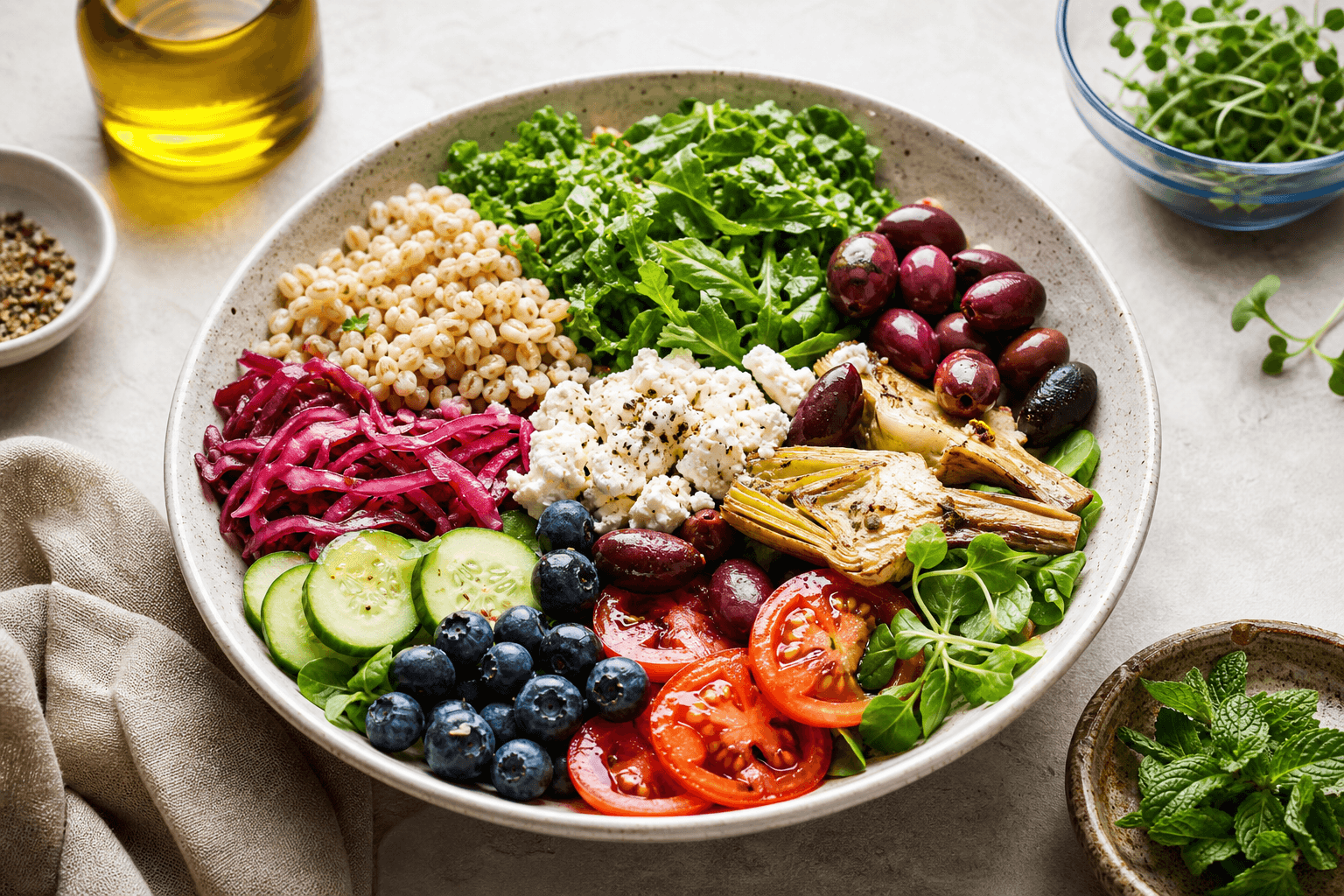
- Polyphenol-rich foods (berries, green tea, olive oil, dark chocolate) — Converted by gut bacteria into antioxidants that counteract oxidative stress, a key driver of cellular aging
- Whole-food carbohydrates over processed options — Complex carbs fuel beneficial bacteria; refined sugars feed pathogenic strains
The Mediterranean and Okinawan diets — both strongly associated with longevity — are naturally high in all three categories. They work because they consistently feed the right bacteria.
The Enzyme Factor: Why You Need More Than the Right Foods
Eating well isn't enough if your digestive system can't break food down properly.
Digestive enzymes break food into absorbable nutrients. When enzyme production is impaired (due to aging, chronic stress, or gut inflammation), food ferments in the intestinal tract instead of being digested — feeding harmful bacteria and compounding inflammation.
This is particularly relevant for patients over 40. Enzyme production naturally decreases with age. At our Forest Hills clinic, functional enzyme therapy supports digestion so nutrients actually reach the cells that need them. For hydration and mineral balance, see electrolytes, hydration, and gut health.
How Chiropractic Care Connects to Gut Health
The nervous system controls digestion. The vagus nerve regulates digestive secretion, motility, and the gut-brain communication loop.
When spinal misalignments compromise nerve signaling, it doesn't just cause back pain. It can disrupt communication between your brain and digestive tract — affecting how efficiently your body processes food, manages inflammation, and absorbs nutrients.
This is why patients receiving chiropractic adjustments and spinal decompression therapy often report improvements in digestion and energy alongside pain relief. It's anatomy — not coincidence.
Lifestyle Factors That Protect Your Microbiome
Beyond diet and digestion, four lifestyle variables significantly influence gut health and longevity:
- Sleep — Gut bacteria follow a circadian rhythm. Disrupted sleep measurably reduces microbiome diversity within days. Prioritizing 7–9 hours directly protects your microbial community.
- Stress management — Chronic stress increases intestinal permeability ("leaky gut") and shifts the microbiome toward pro-inflammatory species. Chiropractic care and nervous system support help regulate the gut-brain axis.
- Hydration — The intestinal mucus layer — which feeds Akkermansia and protects the gut lining — is water-dependent. Chronic mild dehydration degrades it.
- Movement — Regular moderate exercise increases microbiome diversity independently of diet, according to a 2019 review in Frontiers in Physiology.
The Bottom Line
Longevity isn't determined by any single habit. It's the product of an internal environment — shaped daily by what you eat, how you digest it, how you sleep, how you move, and how well your nervous system communicates.
Your gut microbiome is a measurable reflection of that environment. And unlike your genetics, you can change it.
If you're experiencing chronic pain, fatigue, or digestive issues — and you want a practice that looks at the full picture — Nektalov Chiropractic & Wellness in Forest Hills, Queens is built for that. Schedule a consultation or book online.
108-50 71st Ave, Lower Level, Forest Hills, NY 11375 · (718) 275-9000
Frequently asked questions
Can gut health really affect how long I live?
Yes — and the research is compelling. Multiple studies of centenarians have found distinct gut microbiome profiles compared to younger adults, marked by higher diversity and higher concentrations of specific anti-inflammatory bacteria. Gut health influences systemic inflammation, immune function, and metabolic health — all core drivers of how well and how long you live.
What are the early signs that my gut microbiome is out of balance?
Common signs include chronic bloating, irregular digestion, fatigue that doesn't resolve with sleep, frequent illness, brain fog, and difficulty maintaining a healthy weight. These symptoms often indicate microbial imbalance and reduced gut barrier function.
How quickly can I change my gut microbiome?
Studies show measurable microbiome shifts within 3–5 days of dietary change. A 2021 Stanford study found significant increases in diversity after just 10 weeks of a high-fermented-food diet. Long-term changes require consistency, but the gut responds relatively quickly.
What does a chiropractor have to do with gut health?
The nervous system — specifically the vagus nerve — directly regulates digestive function. Spinal alignment affects nerve signal quality throughout the body, including the gut-brain axis. Patients who receive chiropractic adjustments often notice improvements in digestion, not just pain — because the same nervous system controls both.
Can I support my gut health at Nektalov Chiropractic?
Yes. Dr. Boris Nektalov is both a chiropractor and enzyme nutrition specialist. The clinic offers functional enzyme therapy and nutritional support alongside chiropractic care — addressing both the structural and internal factors that influence how your body functions and ages.
Should I see a doctor before making major diet changes?
If you have existing digestive conditions, are on medication, or have chronic health concerns, consult your primary care physician first. For general dietary improvement and digestive support, the strategies outlined here are broadly safe and evidence-supported.
Dr. Boris Nektalov, DNM, DC is a chiropractor and enzyme nutrition specialist serving Forest Hills and Queens, NY. This article is for educational purposes and does not constitute medical advice. For persistent or severe symptoms, consult your healthcare provider. Learn more about Dr. Nektalov.